
Medicinal cannabis database helps doctors improve care by providing general practitioners and authorised prescribers with access to accurate, evidence-based information in Australia’s rapidly evolving medicinal cannabis landscape. Since its legalisation for medical purposes in 2016, medicinal cannabis use has grown significantly, with more than 320,000 Special Access Scheme (SAS) approvals granted by late 2022 and over 800 cannabis products available.
A comprehensive medicinal cannabis database supports informed prescribing decisions, helps maintain Therapeutic Goods Administration (TGA) compliance, and enables clinicians to improve patient outcomes through safer, more effective care.
Australian general practitioners often serve as the first point of contact for patients exploring medicinal cannabis as a treatment option for chronic conditions such as pain, anxiety, and sleep disorders. However, many clinicians still face knowledge gaps when assessing medicinal cannabis therapies and their potential applications. For example, a 2020 study found that nearly 67% of surveyed GPs considered their knowledge inadequate, while only 22% had prescribed cannabis.
Therefore, clinicians need access to centralised, accurate, and evidence-based information to support informed prescribing decisions. Unlike conventional medicines, medicinal cannabis products vary significantly in cannabinoid composition, formulation, including oils, capsules, and dried flower, and approved clinical uses. As a result, prescribers must carefully evaluate clinical evidence while also navigating regulatory obligations and compliance requirements.
A medicinal cannabis database or knowledge base provides practitioners with a structured collection of medicinal cannabis products and detailed clinical information to support informed prescribing decisions. By using a medicinal cannabis database, clinicians can access reliable product information, compare different formulations, and better understand cannabinoid profiles, indications, and prescribing considerations when developing treatment plans for their patients.
A dedicated medicinal cannabis database offers multiple benefits for authorised prescribers:
Databases provide up-to-date listings of all TGA-notified medicinal cannabis products. This helps doctors compare options by THC/CBD content, form, category, and more. Since most products are unregistered and require SAS or Authorised Prescriber (AP) approval, knowing the correct category (e.g., Category 1 for CBD-only) is essential for compliance.
Databases link to clinical guidelines and systematic reviews on cannabis for medical conditions. This enables prescribers to evaluate the medical literature and assess the benefits of medicinal cannabis for conditions like epilepsy, chronic pain, and nausea. Such resources help address the gap in formal training and support safe prescribing practices.
Prescribing under the SAS or AP scheme involves documentation and understanding of TGA rules. A cannabis database can offer templates, checklists, and alerts about regulatory updates. This ensures prescribers stay compliant and avoid delays or errors.
Knowing how to titrate doses and anticipate side effects (e.g., sedation or cognitive impairment from THC) is vital. A database can summarise this data, improving patient safety and guiding doctors in tailoring medicinal cannabis use to each patient’s needs.
Doctors with access to reliable data can confidently choose suitable products and access pathways. This shortens the time from consultation to prescription fulfilment, improving patient access and treatment outcomes.
Despite growing interest in prescribing medicinal cannabis, many practitioners remain cautious. Concerns include a lack of standardised dosing, potential side effects, and insufficient evidence for some indications. A well-structured database helps bridge this knowledge gap.
By centralising clinical guidance and public health updates, the database empowers practitioners to make informed decisions and counsel patients effectively. It distinguishes between medical use and recreational cannabis use, reinforcing the therapeutic intent of prescribed cannabis.
Comprehensive databases improve:
These factors contribute to improved patient satisfaction and clinical outcomes. As more doctors feel supported in their practice, access to medicinal cannabis expands in a responsible and regulated manner.
With attitudes of Australian general practitioners towards medicinal cannabis becoming more positive, the demand for reliable resources is rising. A comprehensive database provides a vital foundation for safe, informed prescribing. It supports doctors in:
By integrating data, guidelines, and access tools, such a database transforms cannabis prescribing from a niche challenge into a standardised medical process. It enhances prescriber knowledge, patient safety, and public trust in the use of cannabis for medical treatment.
Medicinal cannabis prescribing in Australia is no longer a fringe activity. With demand increasing and the benefits of medicinal cannabis becoming clearer, doctors need dependable resources. A comprehensive database streamlines prescribing, strengthens clinical decision-making, and ensures compliance with TGA standards. For medical practitioners, it’s an essential tool in delivering effective, personalised care in the era of cannabis medicine.
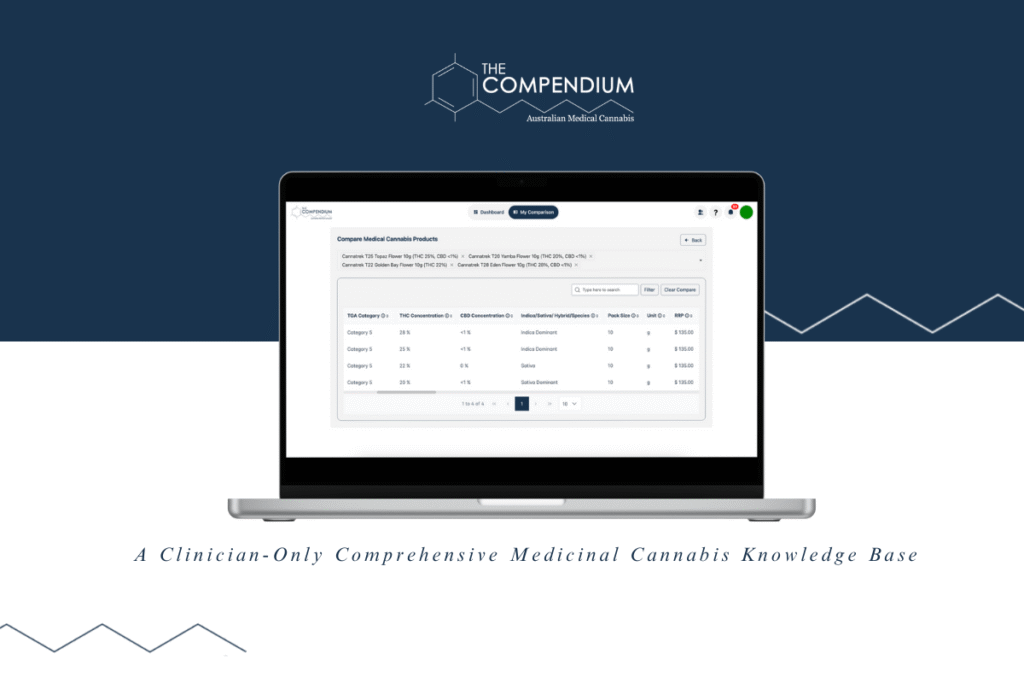
The Compendium provides authorised prescribers with a dedicated, clinician-focused database that bridges the gap between clinical practice and regulatory demands. Whether you’re navigating the Special Access Scheme or seeking evidence-based insights for patient treatment plans, The Compendium offers the clarity, compliance, and confidence required for modern cannabis prescribing.
Start prescribing with confidence. Explore The Compendium today and empower your cannabis clinical practice.