Understanding TGA Access Pathways is essential for suppliers and clinicians involved in prescribing alternative medicines in Australia. Imagine you’re working with a patient for whom an alternative therapy is being considered.
Some therapeutic goods are not included in the Australian Register of Therapeutic Goods (ARTG) and may therefore require access through approved Therapeutic Goods Administration (TGA) pathways. Understanding these TGA Access Pathways helps healthcare practitioners navigate regulatory requirements while supporting informed clinical decision-making.
The two most common pathways are the Special Access Scheme (SAS) and the Authorised Prescriber (AP) Scheme. This article explains how these pathways work, outlines key prescriber responsibilities, and explores how clinician-only reference tools such as The Compendium can support informed clinical decision-making and regulatory compliance.
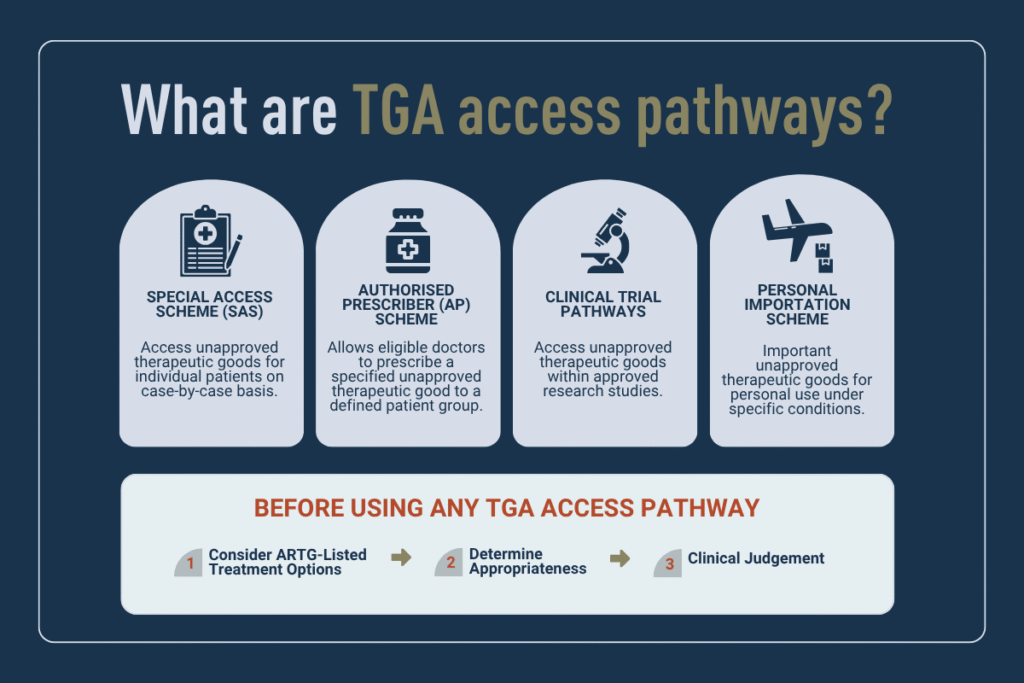
Therapeutic goods generally require inclusion in the ARTG before supply in Australia. However, the TGA provides several pathways for access to specific unapproved therapeutic goods under defined circumstances.
These pathways include:
Before using any TGA access pathway, clinicians must first consider available ARTG-listed treatment options. They must also determine whether an unapproved therapeutic good is appropriate for the patient’s treatment plan.
Importantly, access through the SAS or Authorised Prescriber pathway does not represent TGA approval of a product’s safety, quality or efficacy.
The Special Access Scheme (SAS) enables eligible healthcare practitioners to access unapproved therapeutic goods for individual patients on a case-by-case basis.
This pathway applies to patients who are seriously ill or whose condition is life-threatening. Prescribers can supply the therapeutic good and notify the TGA within the required timeframe.
SAS Category B is the most commonly used pathway. Practitioners must submit an application to the TGA before prescribing the product and provide clinical justification for its use.
Category C applies to specific therapeutic goods and indications approved for notification-only access by eligible practitioner groups.
Each SAS application relates to a specific patient and therapeutic good. If circumstances change, additional applications may be required.
The Authorised Prescriber Scheme allows eligible medical practitioners to prescribe a specified unapproved therapeutic good to a defined patient group. These patients must share a particular medical condition and meet the approved clinical criteria.
Unlike the Special Access Scheme (SAS), this pathway does not require individual applications for each patient. Once authorised, clinicians can prescribe the approved product within the authorised patient group.
To become an Authorised Prescriber, practitioners must:
As a result, this pathway can streamline access when multiple patients meet the same clinical criteria.
Regardless of the pathway used, TGA compliance for prescribers requires strong clinical governance and thorough documentation.
Before prescribing an unapproved therapeutic good, practitioners should:
In addition, healthcare practitioners remain responsible for the clinical use of unapproved therapeutic goods and associated patient outcomes. Therefore, patient monitoring, adverse event reporting and accurate clinical documentation play a vital role in maintaining compliance and supporting patient safety.
Access to accurate product information plays an important role in navigating TGA Access Pathways. Healthcare practitioners rely on current information to support informed clinical decision-making and regulatory compliance.
The Compendium is a clinician-only reference platform that supports evidence-based medicine and informed prescribing practices. Through a centralised resource, healthcare practitioners can review product information, ingredient profiles, formulation details and supplier availability.
In addition, the platform supports collaboration between clinicians, suppliers, pharmacists and distributors. It provides access to current product information and supply updates in one location.
For healthcare practitioners involved in alternative medicine prescribing across Australia, reliable information can support therapeutic assessments, clinical governance processes and accurate record-keeping. Furthermore, clinicians can access educational resources through The Compendium’s Clinicians Hub and stay informed through industry updates available across the platform.
Understanding TGA Access Pathways helps healthcare practitioners prescribe alternative therapies responsibly in Australia. Both the Special Access Scheme (SAS) and Authorised Prescriber Scheme involve specific regulatory obligations and documentation requirements.
By maintaining strong clinical governance, obtaining informed consent and following TGA prescribing requirements, practitioners can navigate alternative medicine access pathways effectively.
Additionally, resources such as The Compendium provide access to current product information, educational resources and clinical reference material. These resources can support informed decision-making within Australia’s regulatory framework.