
Imagine this: a pharmacist mentions a new medicinal cannabis formulation in a professional newsletter, and within weeks, the business receives a please-explain letter from the regulator. It happens more often than you’d think.
TGA advertising restrictions are strict, and the line between “sharing information” and “advertising” is easy to cross without meaning to. This article breaks down what’s permitted, what’s prohibited, and how suppliers, distributors, and pharmacists can stay on the right side of the rules.
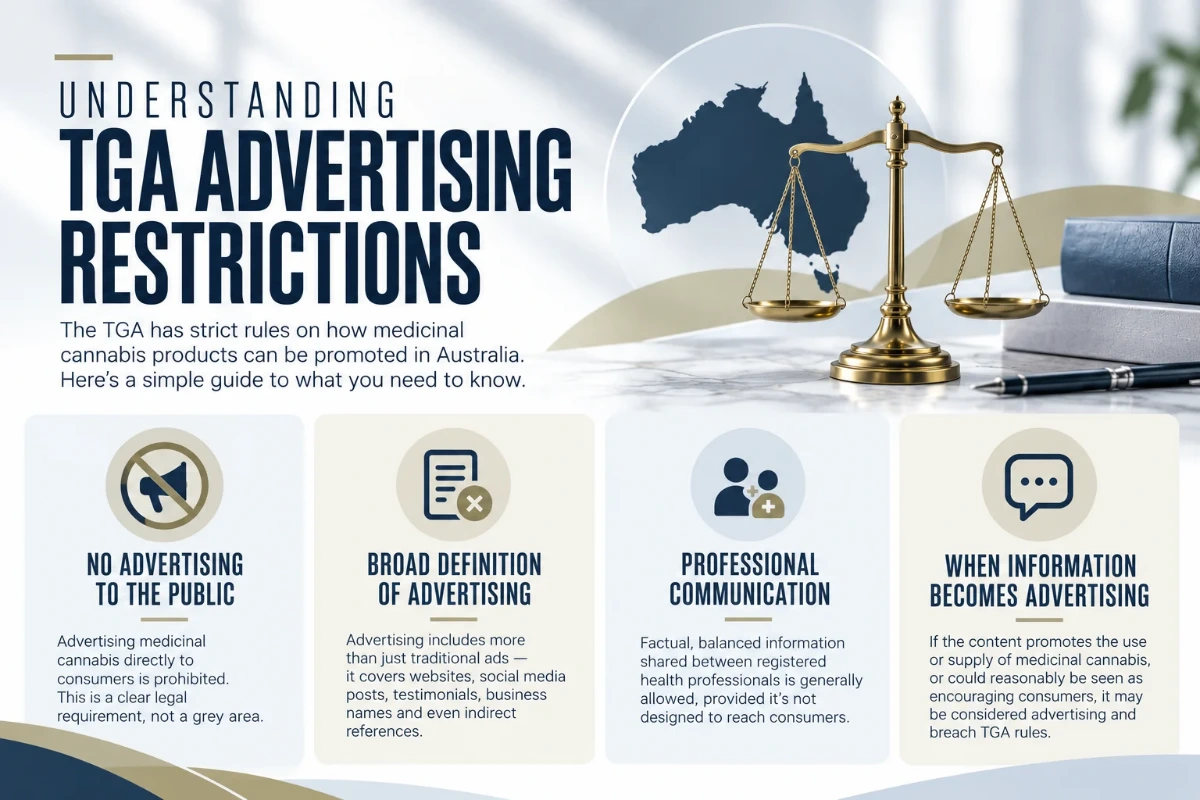
The Therapeutic Goods Administration regulates how prescription medicines, including medicinal cannabis, are promoted in Australia. Under the Therapeutic Goods Act 1989, advertising medicinal cannabis directly to the public is prohibited outright. This isn’t a grey area or a soft guideline; it’s a hard legal boundary.
TGA medicinal cannabis regulations treat these products as prescription-only medicines. That means the usual consumer advertising playbook simply doesn’t apply here, regardless of how educational or well-intentioned the content might seem.
Why Medicinal Cannabis Sits in a Different Category
Most therapeutic goods advertised to the public are listed or registered on the Australian Register of Therapeutic Goods (ARTG). Medicinal cannabis products largely aren’t. Because they’re accessed through special pathways rather than standard registration, they fall outside what businesses are ever allowed to promote to consumers.
Advertising isn’t limited to obvious things like billboards or Facebook ads. The TGA prohibited advertising definition is broad, covering:
Even indirect references can trigger a breach. If a consumer viewing your material would reasonably assume medicinal cannabis is involved, that’s enough to count as advertising under cannabis advertising laws Australia enforces.
This is where most confusion happens. Not all communication about medicinal cannabis is advertising. Genuinely balanced, factual information, the kind aimed at helping someone understand treatment options rather than persuading them toward a specific product, can sit outside the prohibition.
However, that balance is easy to lose. Linking to a biased overseas blog, cherry-picking positive outcomes, or including a call to action nudges neutral information into advertising territory fast.
Professional-to-Professional Communication
Medicinal cannabis prescriber information shared between health professionals operates under different rules than consumer-facing content. Pharmacists communicating with prescribers, or distributors briefing pharmacies, generally have more room to discuss product specifics, provided the audience is genuinely professional, and the material isn’t designed to filter through to patients.
So, what information can doctors share about medicinal cannabis without breaching the rules? Generally, health professionals can:
What they can’t do is turn that same information into promotional material aimed at attracting new patients or selling a specific brand.
Medicinal cannabis is typically a Schedule 8 controlled drug, adding another compliance layer. Schedule 8 advertising restrictions work alongside the Therapeutic Goods Advertising Code, which requires any permitted advertising (for approved products only) to be accurate, balanced, and not misleading.
Businesses offering health services should also take care that promotions don’t imply a consultation exists purely to secure a cannabis prescription; the TGA treats this as unlawful advertising of medicinal cannabis, even if cannabis is never named outright.
TGA penalties for illegal advertising are significant. Breaches can result in:
The TGA has made unapproved therapeutic goods advertising enforcement a compliance priority, so businesses shouldn’t assume smaller operators fly under the radar.
If you’re wondering how to legally promote medicinal cannabis products, the honest answer is: you largely can’t, not to consumers. Instead, focus energy on:
Following information sharing guidelines for medicinal cannabis clinics protects both your reputation and your licence to operate.
Navigating TGA advertising restrictions doesn’t mean staying silent; it means being deliberate about audience, tone, and intent. Knowing where information sharing ends and advertising begins is one of the more practical skills a pharmacy or distributor can build into everyday practice, and it only gets more important as guidance continues to evolve.
The Compendium tracks regulatory updates like this one as part of its ongoing coverage of the medicinal cannabis sector. For further reading on TGA guidance and industry developments, see the Compendium blog.
This article provides general regulatory information and is not legal advice. Businesses should confirm current requirements against official TGA guidance or seek independent legal advice for their specific circumstances.