As more Australians use complementary therapies, integrating alternative medicine into clinical practice is becoming increasingly important. Around two-thirds of Australian adults already use traditional or complementary medicine. As patient demand grows, healthcare teams need clear governance, documentation and compliance processes to support the safe integration of alternative medicine into care.
This blog explains how robust policies, consent procedures, monitoring, and record-keeping support the safe use of alternative medicine under TGA expectations. Readers will also learn practical steps for developing treatment plans and obtaining informed consent. As a result, providers can stay compliant, protect patient safety, and use resources like The Compendium database of verified products.
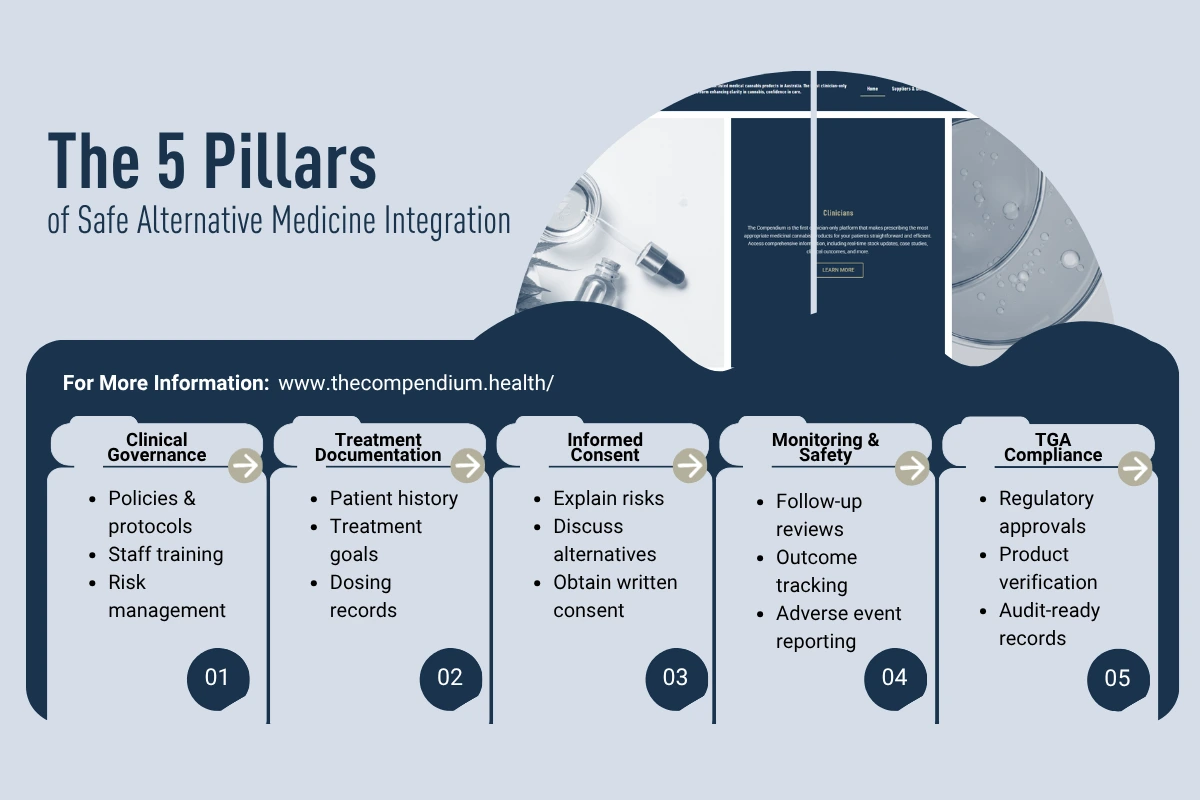
Strong clinical governance supports every integrative healthcare approach. Governance includes leadership, policies, and risk management designed to protect patients.
Importantly, specialists highlight that formal oversight and standardised protocols strengthen trust in integrative medicine. An academic study also found that strong governance supports safe traditional and complementary integrative healthcare delivery. Governance should include credentialed practitioners, evidence-based services, and clear risk-management protocols.
In practice, healthcare teams may:
Additionally, the World Health Organisation identifies leadership and governance as essential integration pillars. Therefore, clinics and pharmacies should manage alternative medicine like any other healthcare service. This includes written policies, staff training, and clear accountability measures. As a result, teams can support consistent, transparent, and patient-centred care guided by current evidence.
Comprehensive documentation supports safe and consistent integrative healthcare. Providers should create personalised treatment plans combining conventional and complementary therapies.
Importantly, integrative medicine guidelines recommend documenting plans according to each patient’s individual needs and treatment goals. Structured documentation also helps clinicians evaluate outcomes against clearly defined objectives.
Key documentation elements include:
Documentation best practices may also include:
By maintaining structured documentation, clinicians support continuity of care across multidisciplinary teams. Consequently, nurses, pharmacists, and practitioners can clearly understand each patient’s treatment approach. Detailed records also strengthen accountability and support compliance during regulatory audits.
Obtaining informed consent remains essential when providing integrative healthcare treatments. This step becomes especially important for unapproved or controlled therapeutic products.
The Therapeutic Goods Administration (TGA) requires written informed consent for unapproved therapeutic goods. Therefore, clinicians should explain important treatment details before prescribing medicinal cannabis or similar products.
These discussions should include:
Clinicians should then document consent clearly within the patient’s medical record. Additionally, Queensland Health advises prescribers to obtain written informed consent for medicinal cannabis treatment.
Best-practice consent discussions may also include:
Importantly, practitioners should also disclose professional or financial interests linked to recommended products. Integrative medicine guidelines encourage transparency to help avoid potential conflicts of interest.
Ultimately, informed consent supports patient autonomy and shared decision-making. Clear communication and detailed records also help protect patients, practitioners, and healthcare organisations.
Once clinicians begin alternative therapies, they must actively monitor patient progress and safety. Prescribers also remain responsible for outcomes involving unapproved therapeutic products.
Effective monitoring strategies may include:
For example, clinicians prescribing medicinal cannabis for chronic pain should track symptom changes regularly. They should also monitor sedation, cognitive effects, and relevant laboratory results where appropriate.
Importantly, clinicians should establish clear treatment goals and review timelines from the beginning. For instance, providers may reassess treatment if symptoms remain unchanged after several weeks. Clinicians should also document all outcomes and clinical decisions carefully. Structured monitoring helps avoid inconsistent or poorly supervised care approaches.
Monitoring reminders may include:
Ultimately, effective monitoring requires collaboration across the healthcare team. Strong tracking processes also improve patient safety, strengthen governance, and support better long-term care standards.
Finally, healthcare teams must comply with all relevant Australian regulations when providing alternative therapies. Most medicinal cannabis products remain unregistered within Australia’s therapeutic framework. Therefore, clinicians may only access these products through the Therapeutic Goods Administration (TGA) Special Access Scheme and Authorised Prescriber pathways.
Prescribers must also provide clinical justification for each treatment and follow state-based medicines and poisons legislation. Key compliance steps may include:
Additionally, the Australian Regulatory Guidelines for Complementary Medicines (ARGCM) outline documentation and quality expectations for complementary medicine suppliers. Although medicinal cannabis differs from listed complementary medicines, many governance principles still apply.
Resources such as The Compendium may also help clinicians review product quality information, including manufacturing and laboratory data.
Importantly, clinicians should position alternative therapies as supportive additions to standard medical care. This approach aligns with guidance from organisations including the Royal Australian College of General Practitioners (RACGP) and the Australasian Integrative Medicine Association (AIMA). Prioritising evidence-based and patient-centred care remains essential throughout treatment planning.
By integrating compliance into everyday practice, healthcare teams can strengthen patient safety and accountability. For example, recent Queensland guidance highlights auditing and informed consent as important governance measures. Consequently, clinicians should regularly review TGA updates and adverse event reporting processes.
In practice, teams may also use structured templates and compliance checklists to improve consistency. These resources may include consent forms, Special Access Scheme applications, and medicines register documentation.
Healthcare suppliers and distributors may also use specialised platforms to support regulatory compliance and governance processes. The Compendium provides a secure platform that centralises product and regulatory information.
For example, users can review product ingredients, TGA status, manufacturing details, and supporting reference material efficiently. Staff can also verify Good Manufacturing Practice certifications and available product documentation more easily. Consequently, healthcare teams spend less time searching for product information and more time supporting governance processes.
Additionally, integrating The Compendium into prescribing or supply workflows may improve documentation consistency across teams. This approach can also help organisations maintain accurate and audit-ready records.
Ultimately, platforms like The Compendium support more transparent and standardised compliance processes. When healthcare teams access the same current product information, documentation becomes more consistent and reliable. Suppliers may also benefit from stronger governance processes that support compliant prescribing practices and clinician confidence.
Integrating alternative medicine safely and compliantly requires strong governance and thorough clinical documentation. This responsibility is particularly important when prescribing medicinal cannabis products, where clear processes for patient consent, monitoring and record-keeping are essential.
By implementing clear policies, structured treatment plans, informed consent procedures, and active monitoring, providers can support patient safety and regulatory compliance. These processes also help healthcare teams align with Therapeutic Goods Administration (TGA) expectations.
Additionally, platforms like The Compendium can streamline governance processes by centralising product and regulatory information. Access to consistent product data may also improve documentation accuracy and audit readiness.
For suppliers and distributors, strong governance practices can strengthen clinician confidence and support compliant prescribing frameworks. Clinicians and pharmacists may also make more informed decisions when evidence and product information remain easily accessible.
Healthcare organisations can explore The Compendium for current product registries, evidence summaries, and compliance resources. Ultimately, responsible integration of complementary therapies supports patient-centred care while maintaining high clinical and regulatory standards.