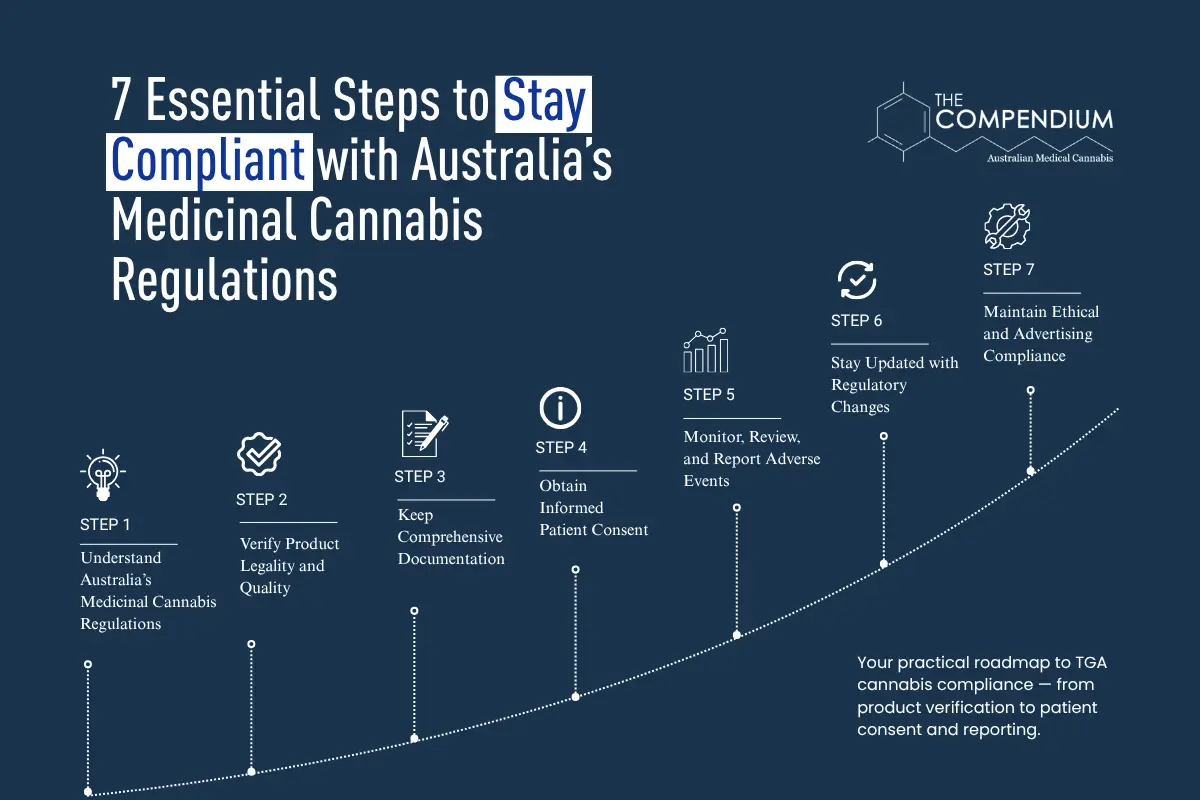
Navigating Australia’s medicinal cannabis regulations can feel overwhelming, especially with evolving TGA requirements and state-by-state differences. Whether you’re a prescriber, clinic owner, or healthcare professional, compliance isn’t optional; it’s the foundation of safe, ethical, and sustainable practice.
In this blog article, you’ll learn seven essential steps to stay compliant with medical cannabis regulations in Australia, reduce administrative burden, and discover how The Compendium, together with OnePhenix, helps simplify compliance so you can focus on what matters most: patient care.
Before prescribing, it’s essential to understand how medicinal cannabis is regulated in Australia. The Therapeutic Goods Administration (TGA) oversees the national framework, supported by the Office of Drug Control (ODC) and state health authorities.
Most prescribers access cannabis for patients through:
Each state and territory may have extra requirements, such as permits or specific storage conditions.
Tip: Use The Compendium’s clinical guidance to check up-to-date prescribing rules for your state.
Quick Facts:
Under TGA cannabis compliance rules, only products meeting TGA 93 – Therapeutic Goods (Standard for Medicinal Cannabis) can be legally prescribed. This ensures each product meets strict standards for identity, purity, and safety.
When prescribing, always:
The Compendium’s product database streamlines this process, enabling clinicians to compare legal cannabis products, review schedules, and access safety information all in one place.
Accurate documentation is central to staying compliant. Prescribers must record every SAS or AP approval, treatment plan, and follow-up outcome. According to the RACGP’s position statement, clinicians should document:
This is where digital tools make compliance easier. Integrated software solutions like OnePhenix automate the process, securely storing approvals, patient histories, and renewal alerts. This ensures your records are audit-ready and TGA-compliant without adding to your admin load.
Together with The Compendium’s evidence-informed resources, OnePhenix helps you maintain complete and compliant patient records effortlessly.
Before prescribing, you must obtain informed consent. Patients need to understand that most medicinal cannabis products are unapproved therapeutic goods, meaning the TGA has not formally assessed them for safety or efficacy.
To comply with regulations:
Both The Compendium and OnePhenix support this step. The Compendium provides patient education materials, while OnePhenix stores consent forms securely within each patient’s digital record.
TGA cannabis compliance doesn’t stop once a script is written. Ongoing monitoring ensures patient safety and regulatory adherence.
Prescribers are responsible for:
The Compendium helps by consolidating clinical data and updates from trusted sources, allowing prescribers to make informed decisions.
Meanwhile, OnePhenix simplifies reporting workflows, logging side effects, updating treatment notes, and generating reports directly from the platform.
Medicinal cannabis regulations in Australia continue to evolve as new research and policy updates emerge. The TGA, ODC, and RACGP frequently release updates to prescribing frameworks and quality standards.
To stay compliant:
The Compendium’s ongoing updates save time by curating the latest evidence and regulatory announcements, so you’re never caught off guard by policy shifts.
Under the Therapeutic Goods Act, it’s illegal to advertise medicinal cannabis products to the public. Clinics and prescribers may only provide factual, non-promotional information.
Ensure your clinic’s website, social media, and printed materials comply with these rules.
Also, store all cannabis products securely, following Schedule 8 handling and record-keeping requirements for THC-containing items.
✔️ Regular internal audits can help identify any compliance gaps early.
✔️ Keep your digital and physical systems aligned. OnePhenix’s automated logs and permissions can support secure record management.
Remaining compliant with Australia’s medicinal cannabis regulations is key to building trust with patients and regulators alike. By following these seven steps, prescribers can ensure every script, product, and process aligns with TGA cannabis compliance standards.
With The Compendium, you gain a reliable, evidence-based resource to guide your prescribing decisions, while integrated solutions like OnePhenix streamline documentation, reporting, and patient management.
Together, they simplify compliance, reduce admin time, and help you focus on delivering safe, effective care.
Ready to make compliance easier?
Explore The Compendium’s clinical tools and discover how OnePhenix integration can support your practice.